
Roof repair · Indianapolis, IN
Most leaks don't need a new roof. They need the right repair.
A roof repair done well starts with finding the actual source, which is rarely where the stain shows up inside. We diagnose the problem on the roof, fix the detail that failed to the manufacturer's spec, and leave the system around it sound. If a repair is all your roof needs, a repair is what we recommend.
We take repair calls across Indianapolis and Central Indiana, including Westfield, Zionsville, Brownsburg and Plainfield.
What we repair
Roofs almost always fail at the details, not across the whole field. These are the repairs we handle most, and each one is fixed the way the component was meant to be installed, not caulked over.
Active leaks
Water follows rafters and decking a long way from where it gets in. We trace the stain back to the actual entry point and fix that, not just the spot above the drip.
Storm & wind damage
Missing, lifted, or creased shingles after a storm. Damaged courses are removed and new shingles are woven into the surrounding field, matched as closely as the existing roof allows.
Flashing at walls & chimneys
Step flashing, counter-flashing, and chimney details that have pulled loose or rusted through. Rebuilt piece by piece so water sheds by geometry, not by a bead of sealant.
Pipe boots & penetrations
Cracked rubber collars on vent pipes are one of the most common leaks in Central Indiana. Boots are replaced and lapped correctly under the shingles above, over the shingles below.
Ridge caps, hips & valleys
Caps take the most weather on the roof and go first. Failed caps are replaced and reseated, and worn valley details are rebuilt with membrane beneath where it belongs.
Spot decking & ventilation
Soft decking under a failed detail is cut out and replaced, not roofed over. Damaged or blocked vents are corrected so the fix lasts instead of trapping the next problem underneath.
A repair starts with a diagnosis
Sealant smeared over a symptom is how the same leak comes back next spring. We get on the roof, find where water is actually entering, and check the details around it: the flashing above, the courses beside it, the decking underneath. You get photos of what we found before anything is repaired, so the fix addresses the cause and not the evidence.
Repair or replace? We tell you straight
If the failure is one detail on an otherwise sound roof, we say so and repair it. If the roof is at the end of its life and a repair would only buy months, we say that too, with the photos that show why. What we will not do is sell you a replacement your roof does not need, or a repair we know will not hold. The recommendation follows the evidence.
Small problems have deadlines
A cracked boot or a lifted shingle costs little to fix today. Left through a few freeze-thaw cycles, the same opening soaks decking, insulation, and drywall, and the repair becomes a restoration. Indiana weather does not wait, so if you have seen a stain, a missing shingle, or granules collecting in a gutter, the right time to have it looked at is now.
From recent inspections
This is what the findings you get back look like: the detail that failed, marked where it matters, with a plain-language note on what it means and what the fix is.
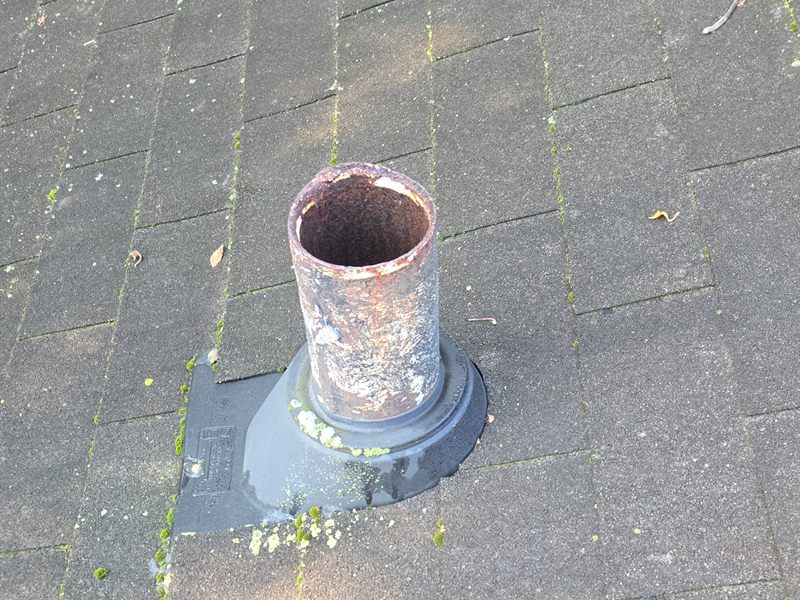
Pipe boot. Collar split and pulled off the pipe. Replaced and lapped under the course above.
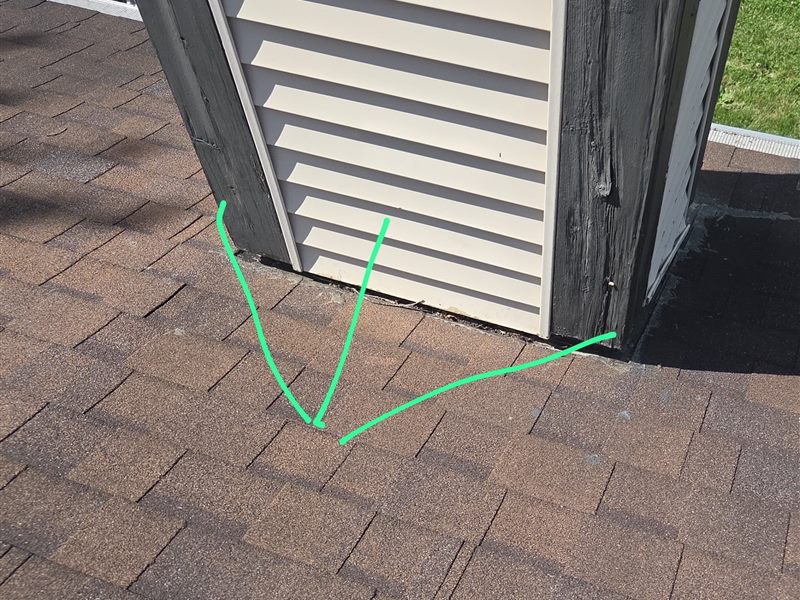
Chimney flashing. Marked where water gets behind the trim. Step and counterflashing rebuilt in metal.
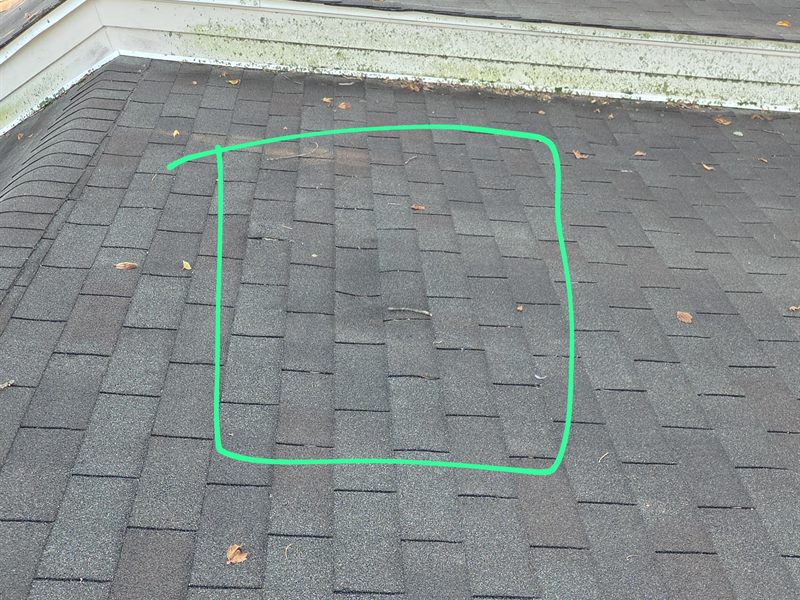
Hail test square. Impacts counted inside the outline, slope by slope, the way an adjuster will.
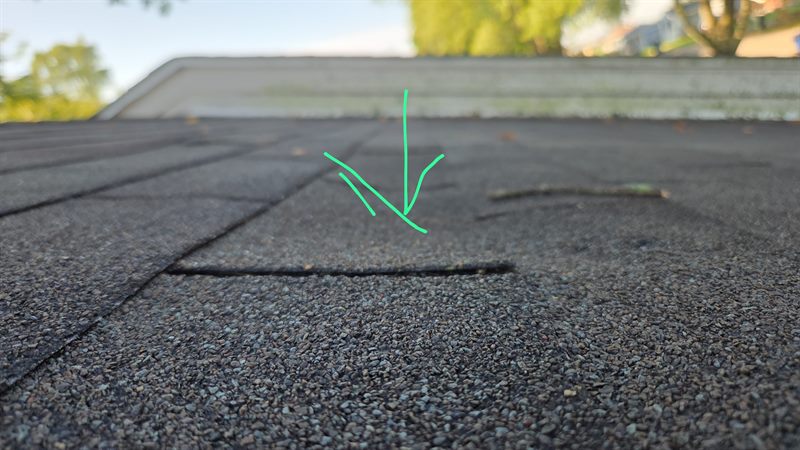
Lifted tab. Seal bond broken after wind. Re-secured and sealed before the next storm finds it.
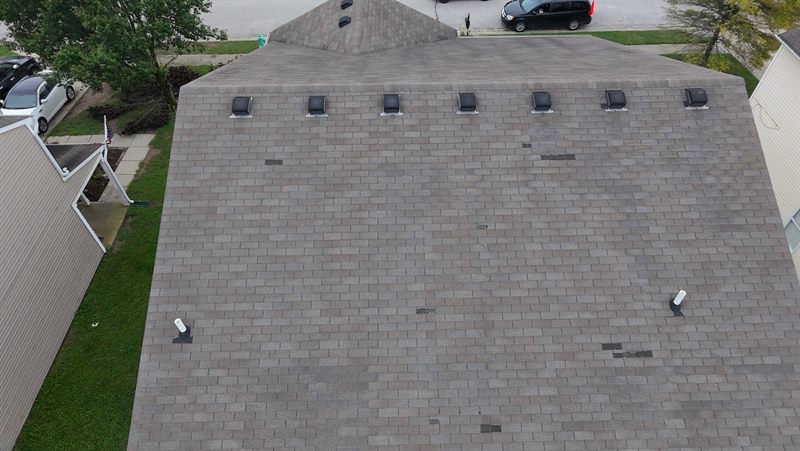
Wind loss from above. A drone pass finds every missing tab on the field at once; each one is woven back in.
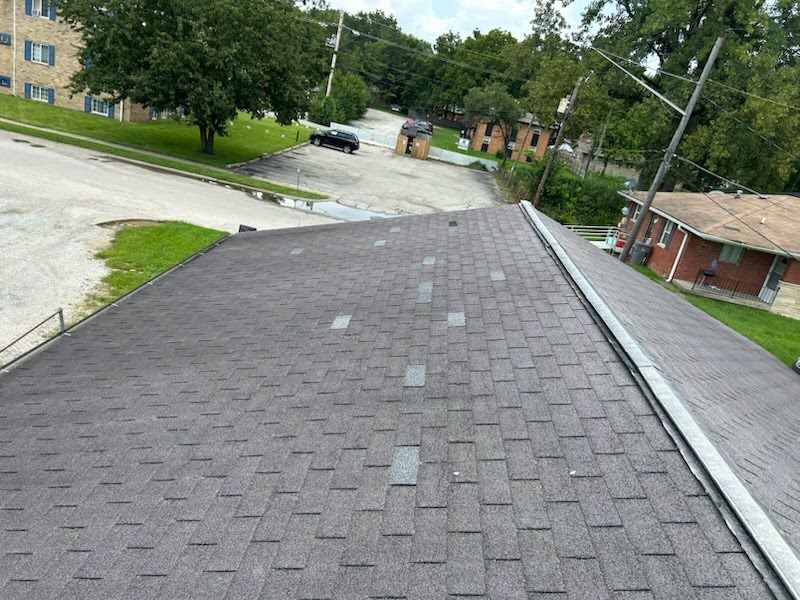
A history of patches. Each mismatched tab is a past repair. Here the honest conversation is about the roof’s next five years.
Where roofs actually fail first
Six details cause most of the leaks we get called about, and none of them are the middle of the shingle field. Select a numbered point to inspect it up close and see what fails there, and how we repair it properly. For the mechanics behind each one, read our guide to why roofs leak.
Caps ride the highest, windiest line of the roof, fastened through their own exposed nail line. Sealant dries out, nails back out, and storm gusts do the rest.
Flashing is metal and sealant working against masonry and siding, and it ages on its own schedule, not the shingles’. Counter-flashing pulls out of mortar joints; step flashing rusts or was never layered right.
Rubber pipe boots and vent seals bake in the summer sun and crack, often years before the shingles around them wear out. The most common leak source on otherwise healthy roofs.
Nails back out as the decking flexes through the seasons; each raised head tents its shingle or opens a direct path to the deck. Old sealant on exposed heads dries and splits.
Central Indiana hail bruises shingles, breaking the granule bond and sometimes cracking the mat, often without anything visible from the ground. The damage ages the roof invisibly.
Drip edges, first courses, and zones under tree lines wear ahead of the rest of the field. Edge details are also where wind gets its first grip on a roof.
Read all six failure points as plain text
- 01 · Ridge & hip caps
- Caps ride the highest, windiest line of the roof, fastened through their own exposed nail line. Sealant dries out, nails back out, and storm gusts do the rest. Signs: Rattling in storms · caps sitting proud or missing after wind. We check whether cap wear is isolated or the first visible sign of system-wide aging. The caps usually tell on the rest of the roof.
- 02 · Chimney & sidewall flashing
- Flashing is metal and sealant working against masonry and siding, and it ages on its own schedule, not the shingles’. Counter-flashing pulls out of mortar joints; step flashing rusts or was never layered right. Signs: Ceiling stains near the chimney · leaks that show up in wind-driven rain. We document every roof-to-wall and chimney joint, then rebuild the failed one with real step and counter-flashing, layered into the courses, not another bead of sealant.
- 03 · Penetrations (vents & pipes)
- Rubber pipe boots and vent seals bake in the summer sun and crack, often years before the shingles around them wear out. The most common leak source on otherwise healthy roofs. Signs: Leak tracking along a bathroom or kitchen vent line. A failed boot is replaced and lapped correctly, under the shingles above and over the shingles below. While we are up there, we check every other penetration so one repair visit covers them all.
- 04 · Exposed fasteners & nail heads
- Nails back out as the decking flexes through the seasons; each raised head tents its shingle or opens a direct path to the deck. Old sealant on exposed heads dries and splits. Signs: Pinhole leaks with no obvious source · rust streaks below a spot. Backed-out fasteners are reset in the nail zone and the affected shingles resealed or replaced, so the fix holds through the next freeze-thaw cycle instead of reopening.
- 05 · Hail impact zones
- Central Indiana hail bruises shingles, breaking the granule bond and sometimes cracking the mat, often without anything visible from the ground. The damage ages the roof invisibly. Signs: Dented vents or gutters after a storm · granules collecting at downspouts. We inspect slope by slope, up close, to tell scattered cosmetic dings from widespread impact damage. That distinction determines what the roof actually needs.
- 06 · Eaves, edges & isolated zones
- Drip edges, first courses, and zones under tree lines wear ahead of the rest of the field. Edge details are also where wind gets its first grip on a roof. Signs: Wear concentrated in one area · damp or stained fascia boards. We check the drip edge, starter course, and lap order at every eave and rake: small details that decide how the whole system handles water and wind.
Pricing
What a roof repair costs, and how we price it
Repair pricing depends on what actually failed, and nobody can tell you that honestly from the street or over the phone. A repair is almost always a small fraction of what a replacement costs, which is exactly why it is worth diagnosing properly instead of guessing.
What moves the number: how many details are involved, whether decking underneath needs replacing, roof pitch and access, and the materials required to match your existing roof. The inspection settles all of that, and you get one written price for the full repair before any work starts.
The price you approve is the price, with no open-ended hourly meter. If we uncover something worse once the detail is open, work pauses and you see photos and a written change before anything continues. And if the inspection shows a repair is not worth your money, we tell you that before you spend it.
How it works
Inspected first. Priced in writing.
one complete price · approved by you
The inspection is free and comes first. You get photos of the problem, the written repair scope, and the full price before you decide anything.
Weighing repair against replacement? Our 2026 roof replacement cost guide lays out the other side of the math.
Schedule a Free Roof InspectionHow a repair comes together
01
Inspect & diagnose
We get on the roof, trace the problem to its source, and photograph what we find, including the details around it.
02
Written scope & price
One clear document: what failed, how it gets fixed, the materials involved, and the complete price. You approve before work starts.
03
The repair, done to spec
Most repairs finish in a single visit. Components are replaced and lapped the way the manufacturer intended, and anything unexpected pauses for your written approval.
04
Photos & walkthrough
You get before-and-after photos of the repair, a cleanup check, and a walkthrough of what was done and what we checked around it.
Seen a stain, a missing shingle, or a drip you can't explain? Start with the free inspection and know for certain.
Schedule a Free Roof Inspection